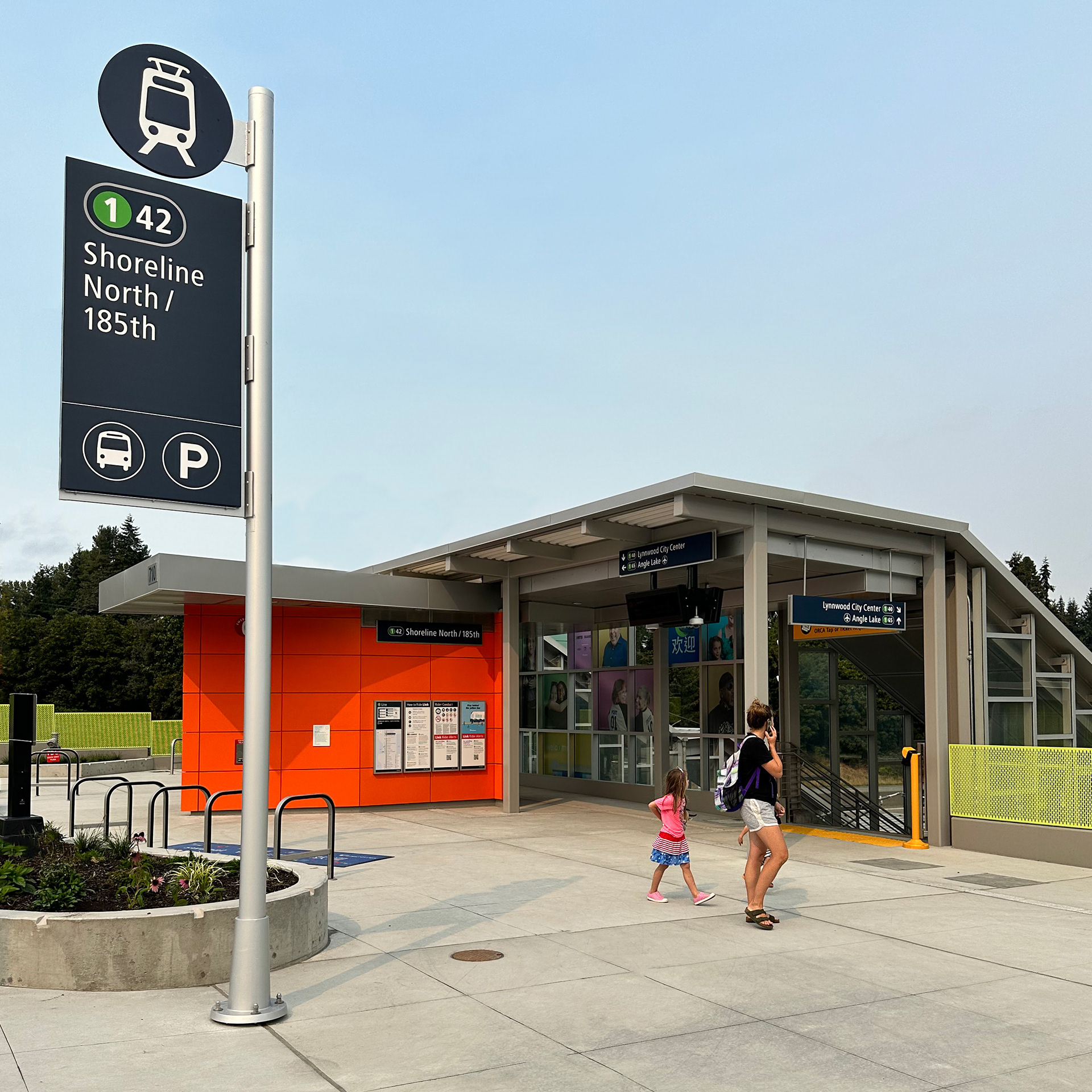
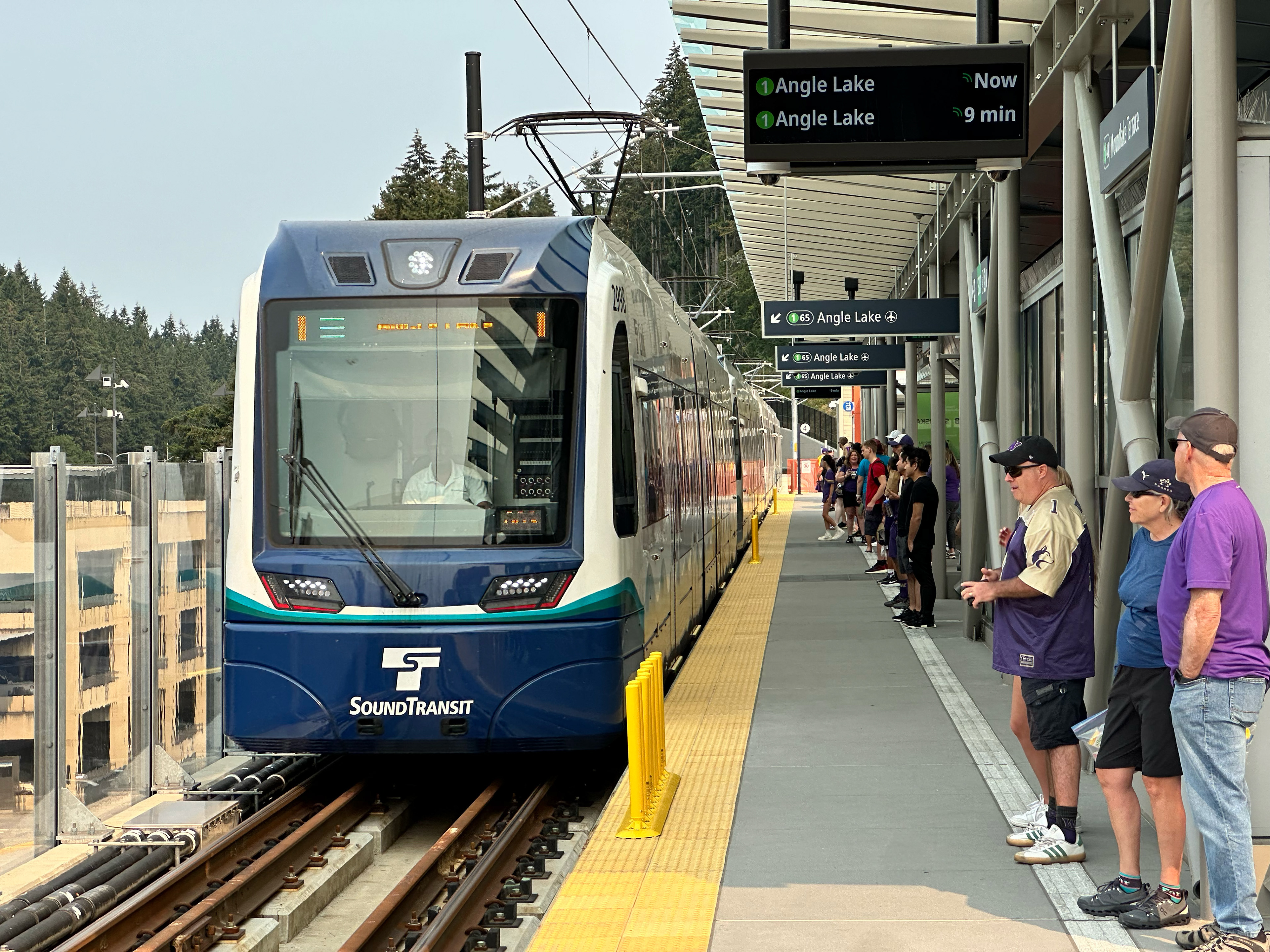
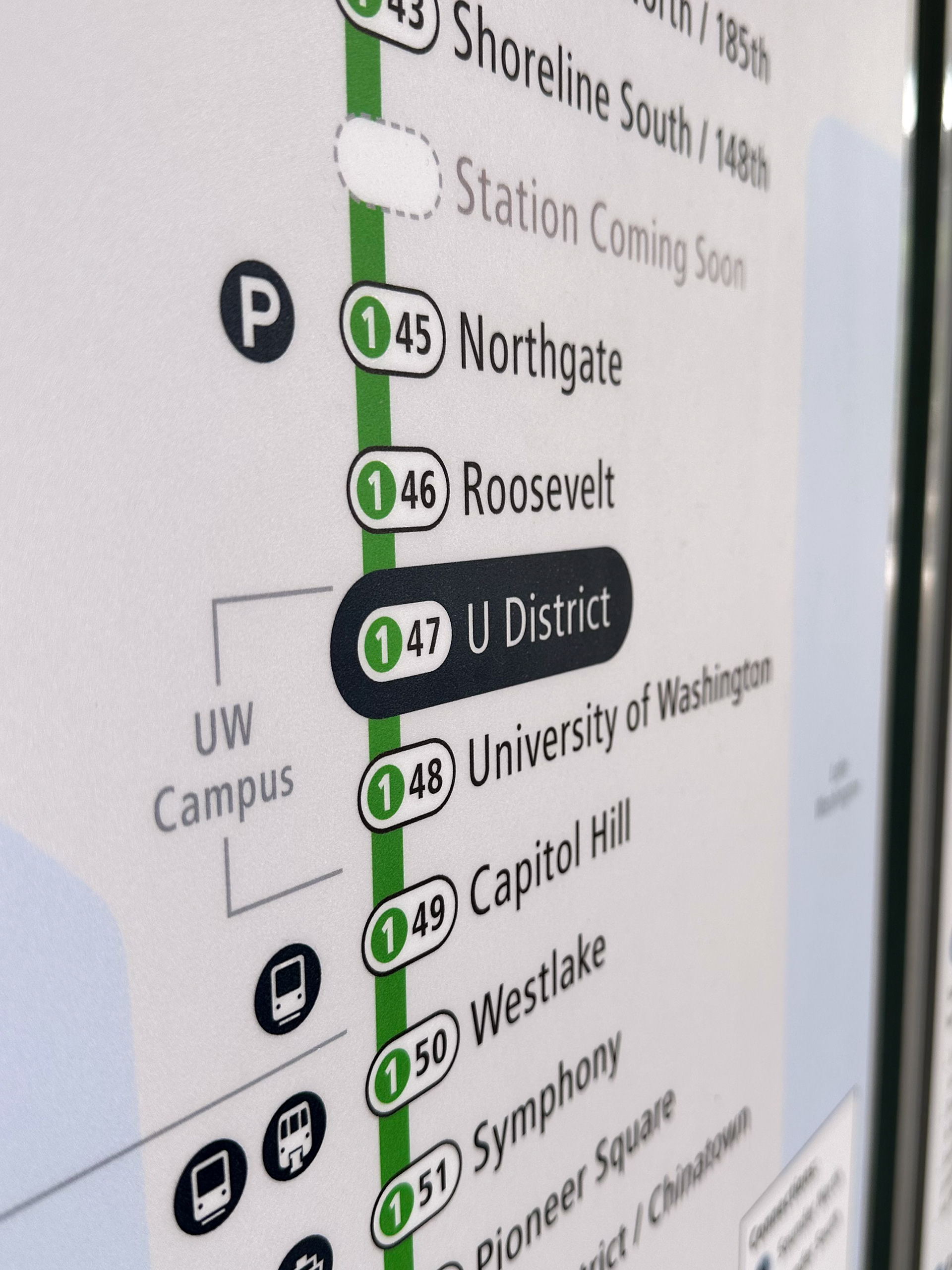
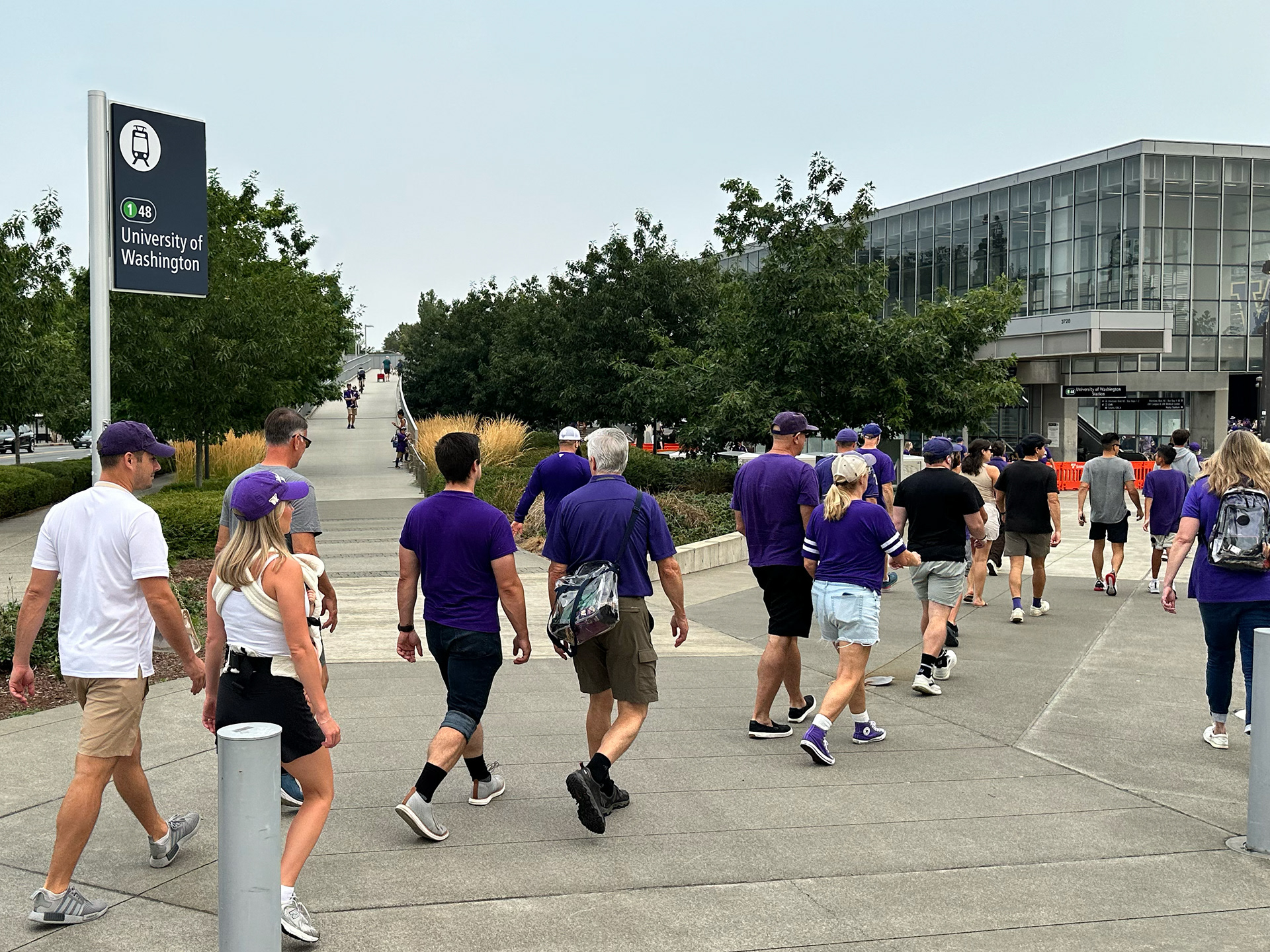
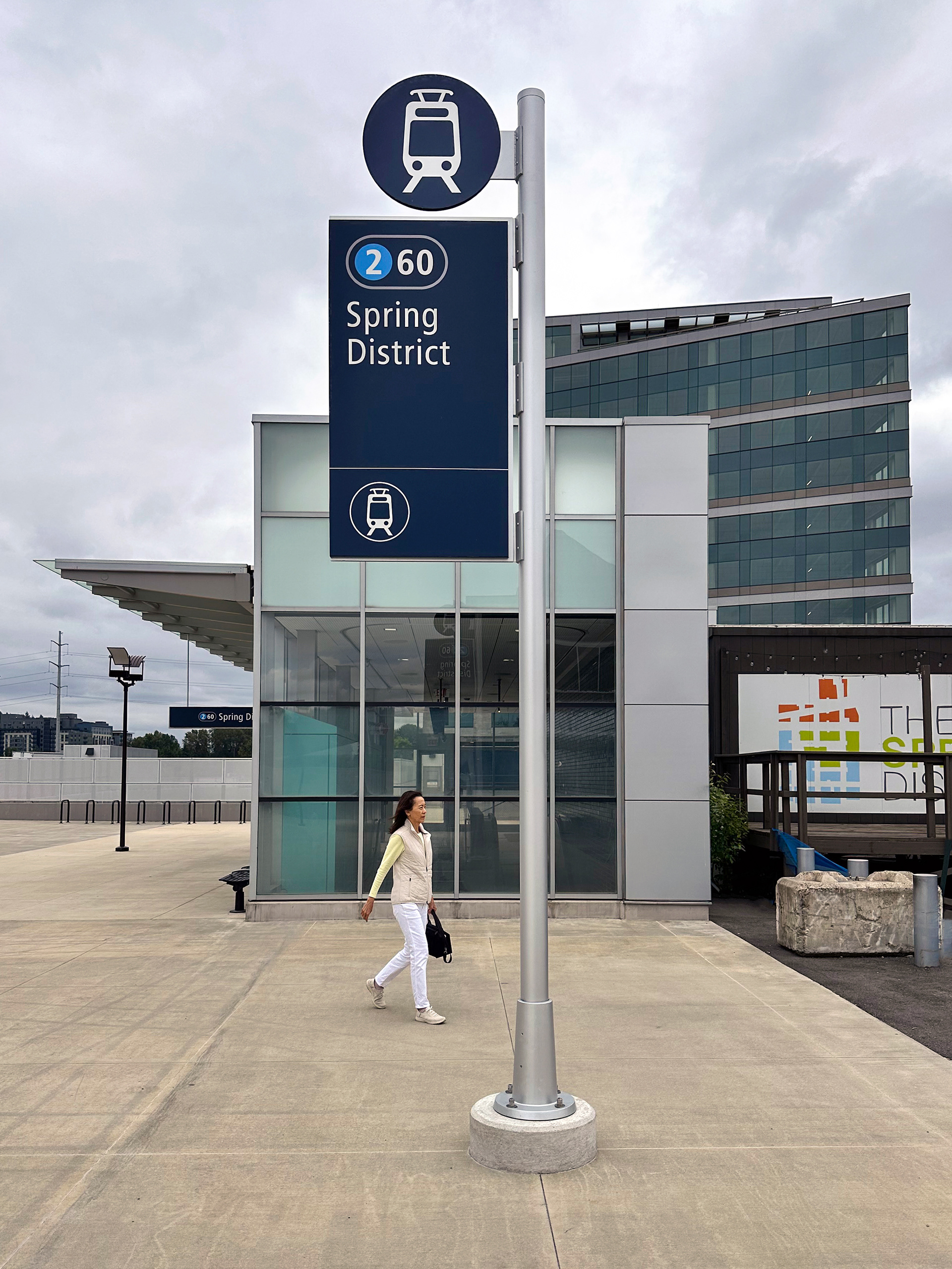
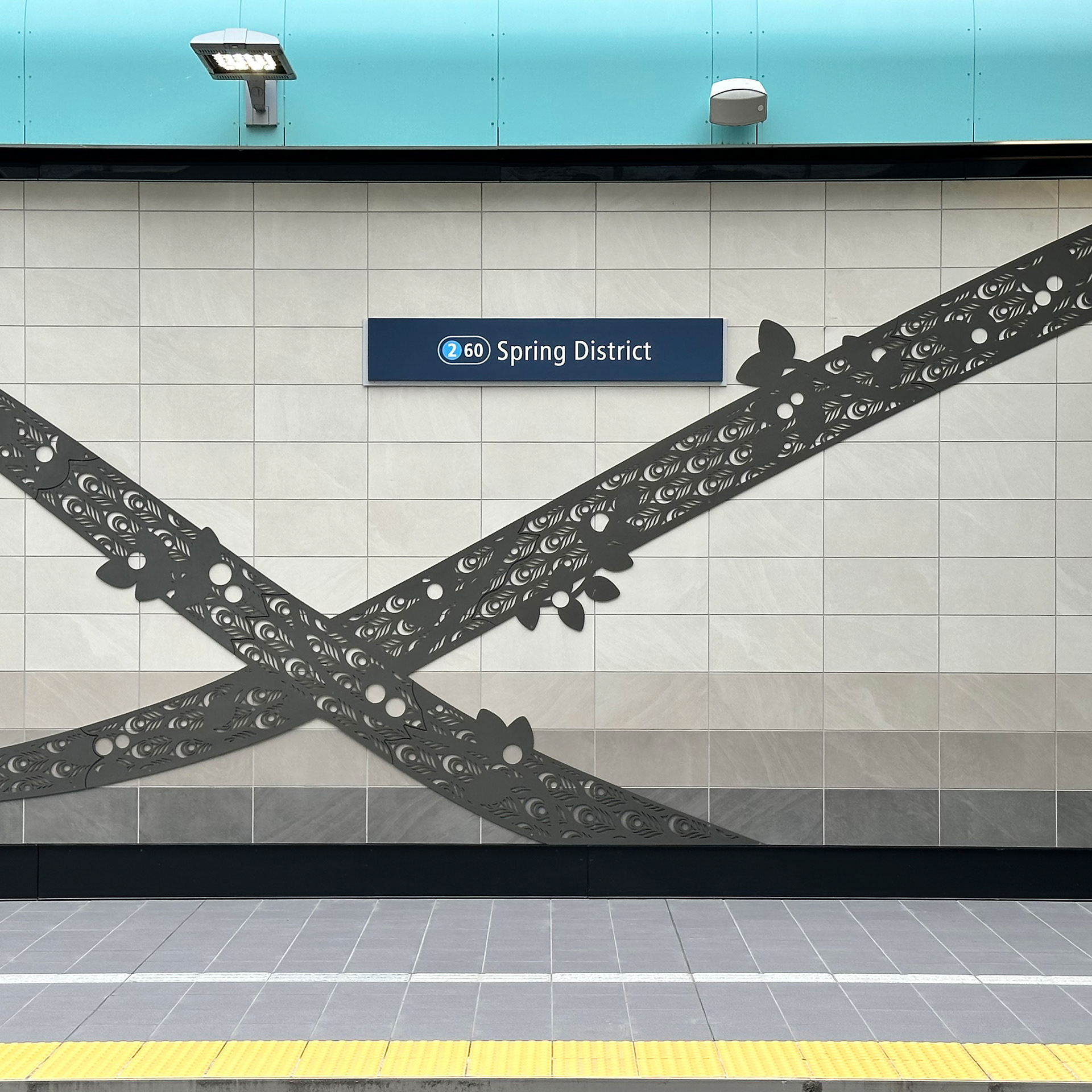
Numbered station codes improve the passenger experience by standardizing them across all station signage, including freestanding identity signs, overhead directionals, and wall-mounted line maps.
Link Light Rail had 30 million boardings in 2025, increasing to 37 million in 2026.
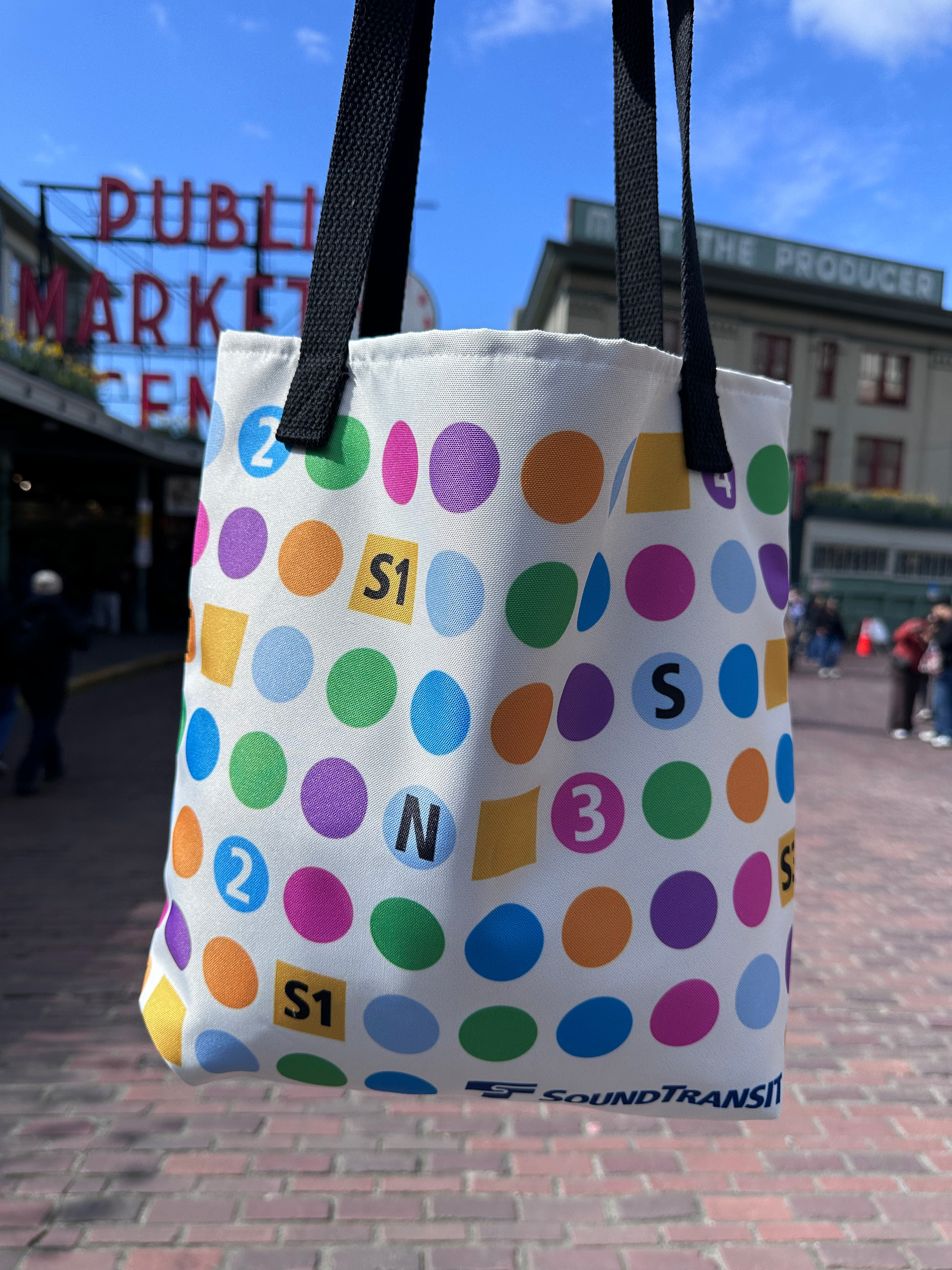
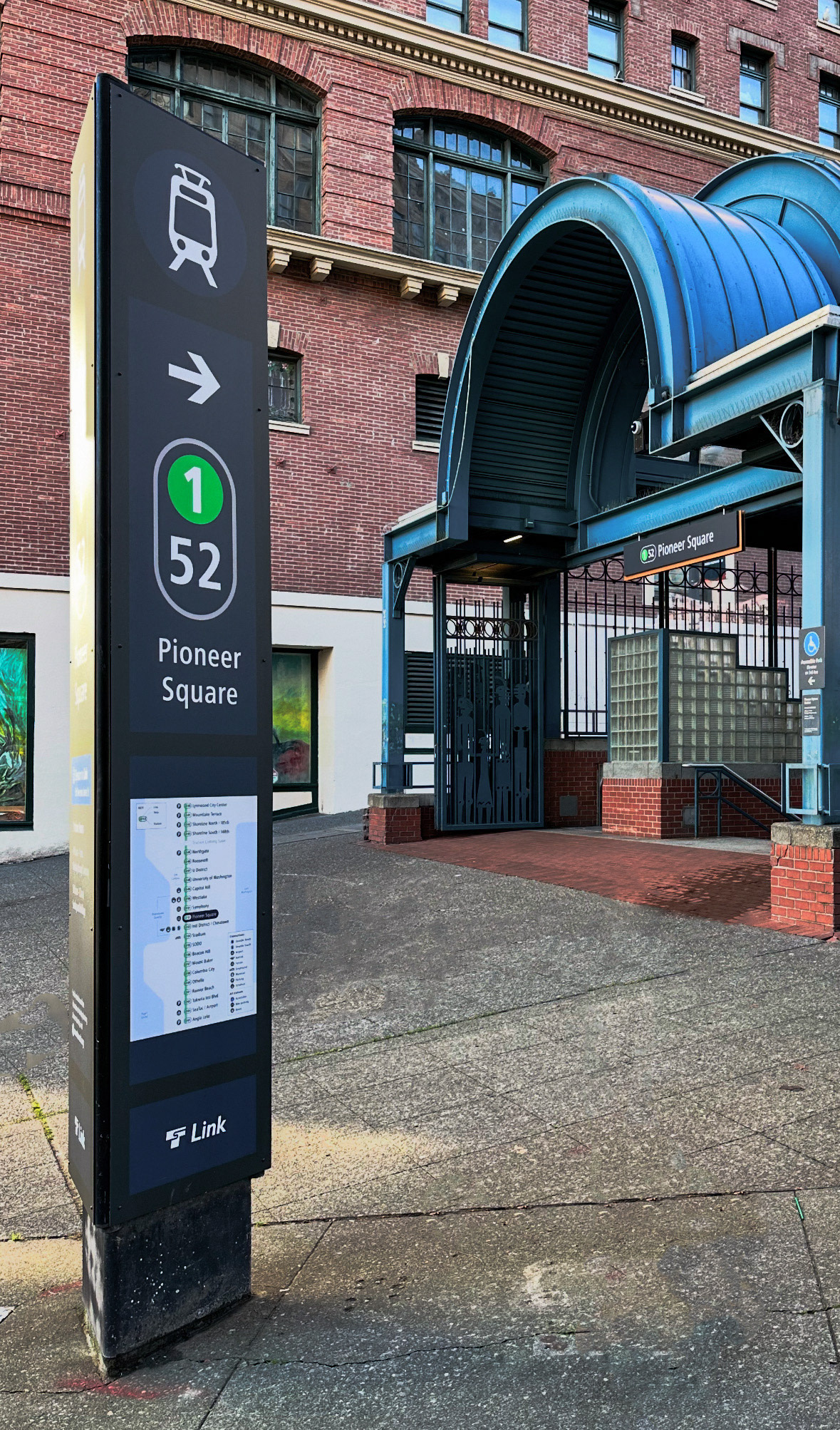
Updated symbols were adjusted to be consistent for more than just signage. Icons and station code wayfinding are applied across many contexts.
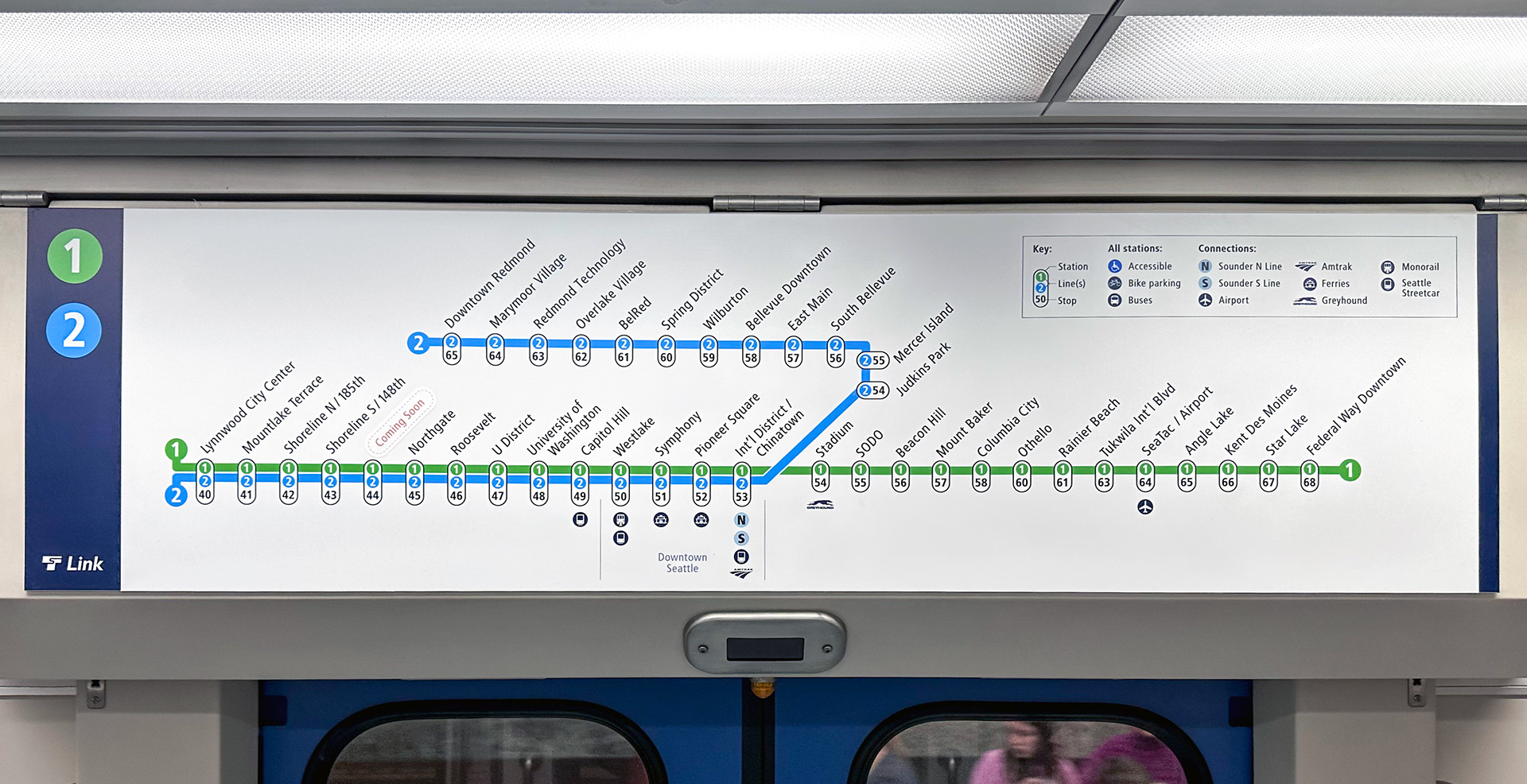
Vehicle maps were updated to introduce numbered station codes as the system expands with new lines serving diverse communities and visitors from around world.
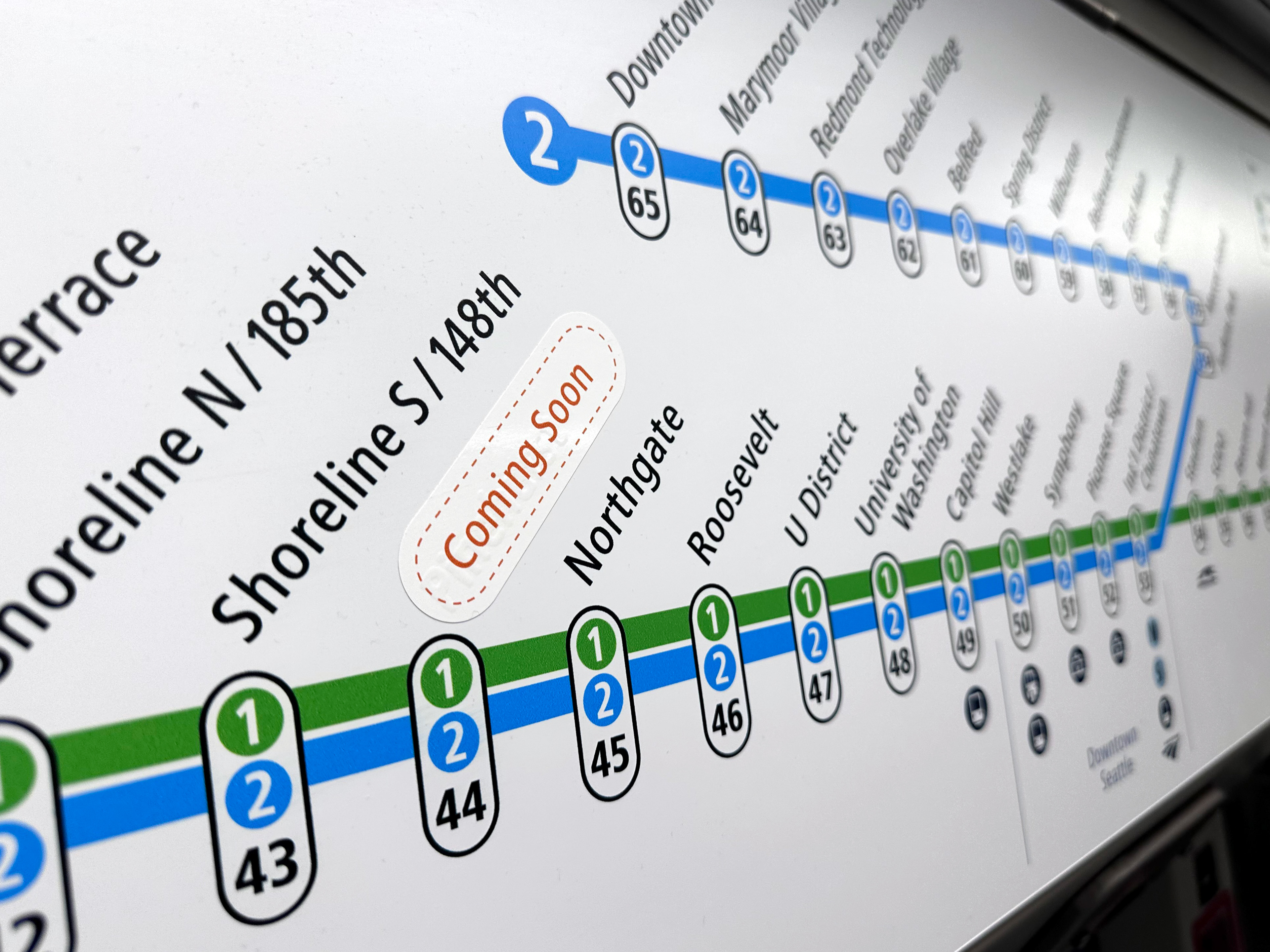
Coming Soon! Maps on vehicles were designed with easy-to-peel stickers for future infill stations and line expansions.
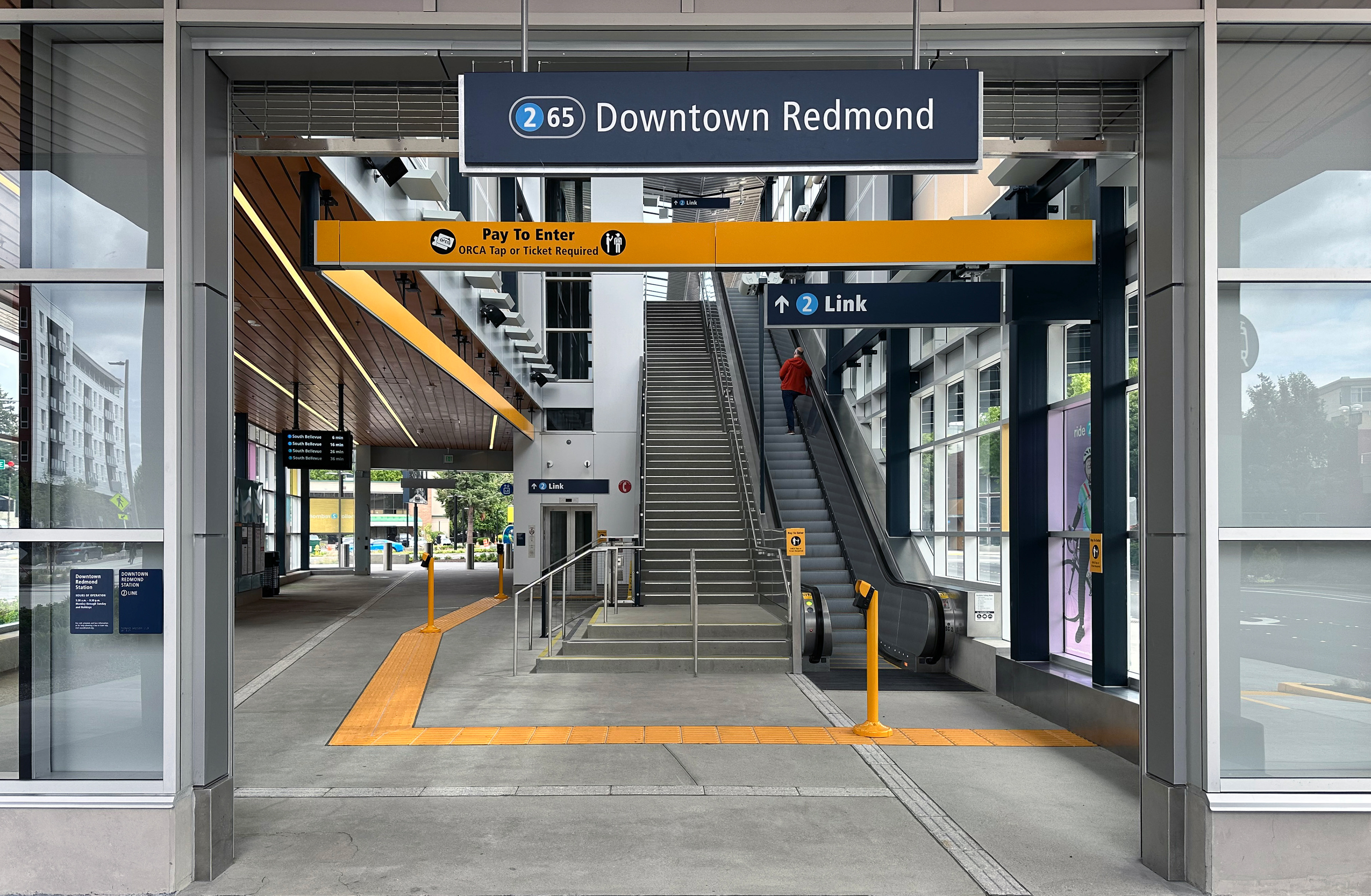
Pay To Enter: Color and iconography define paid fare zones, providing an easy entry point for new riders as the system expands into more cities in the region.
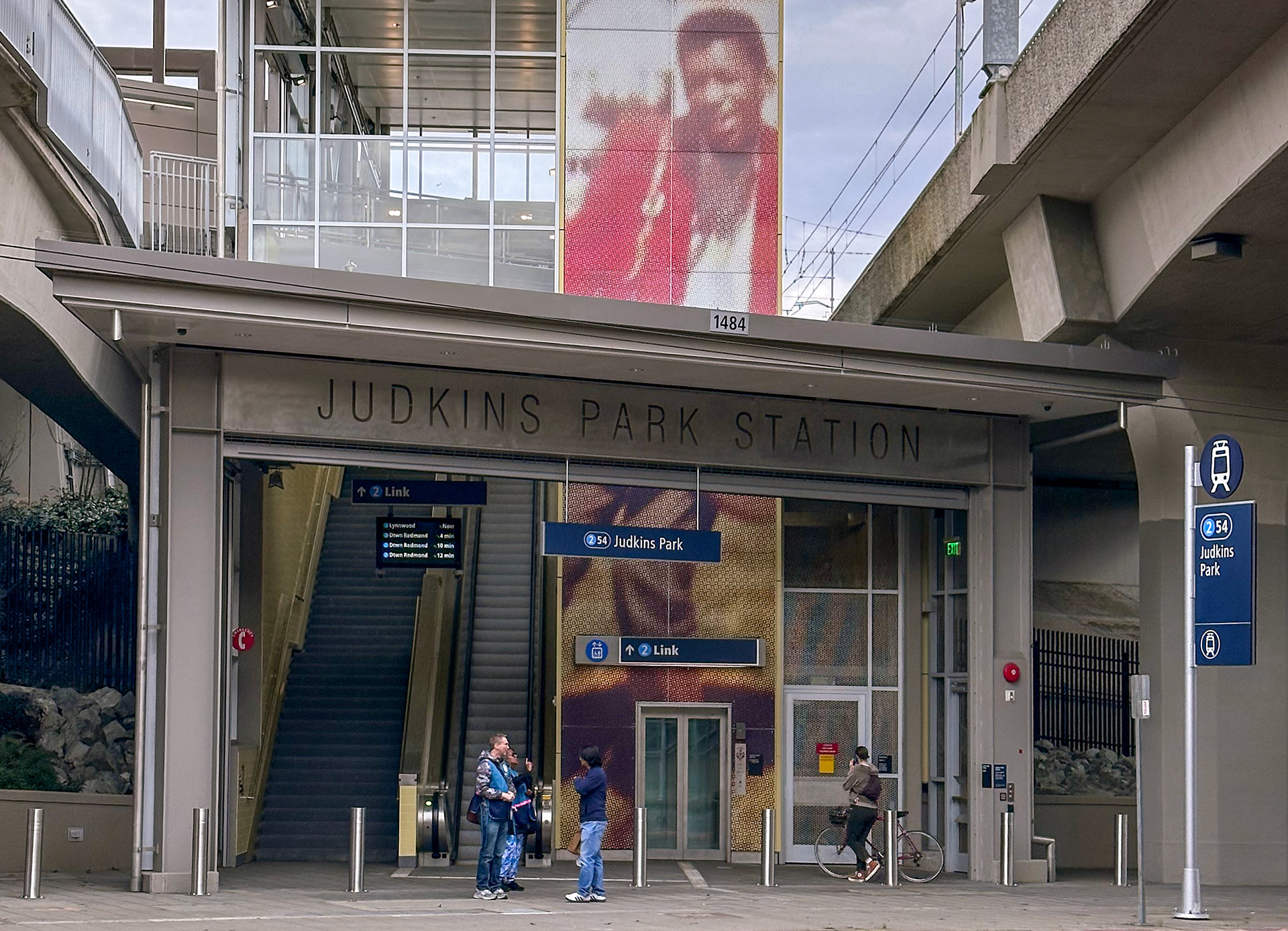
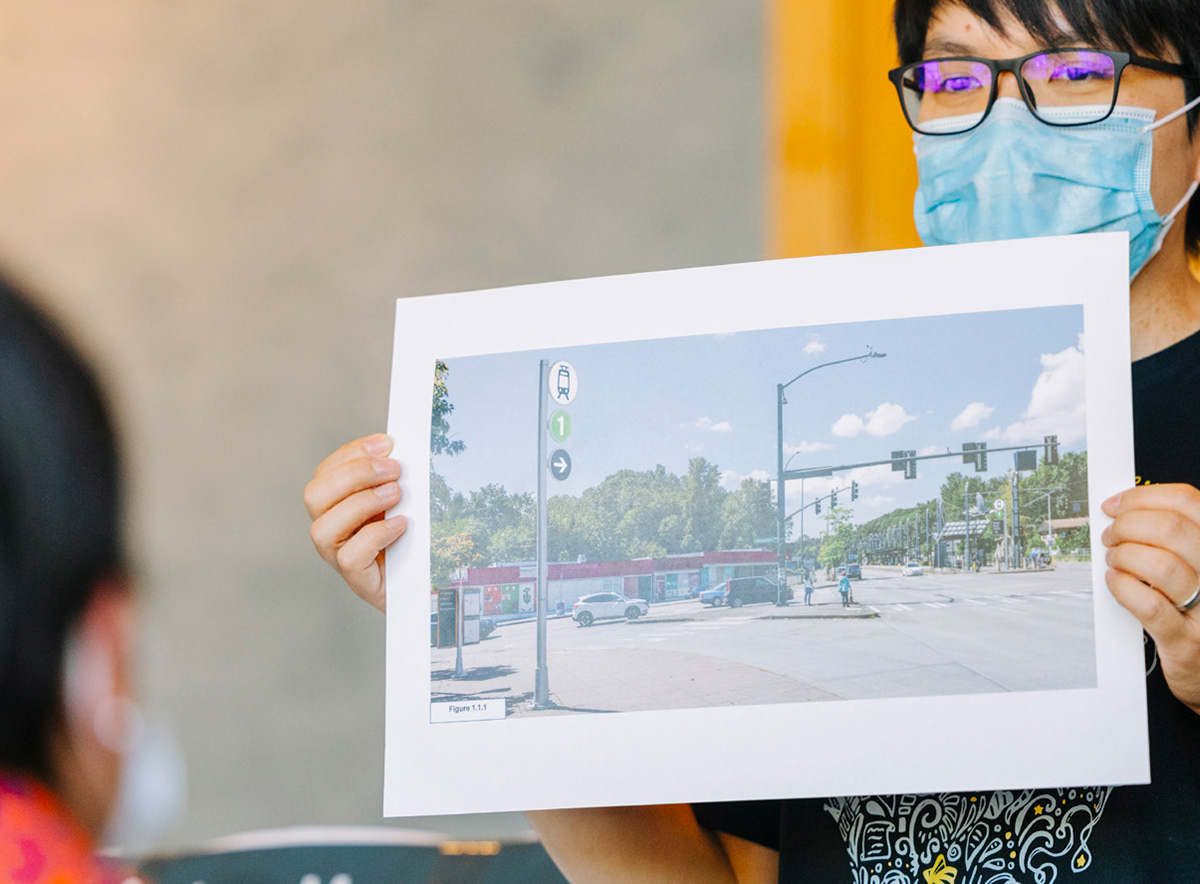
Photo courtesy of Sound Transit
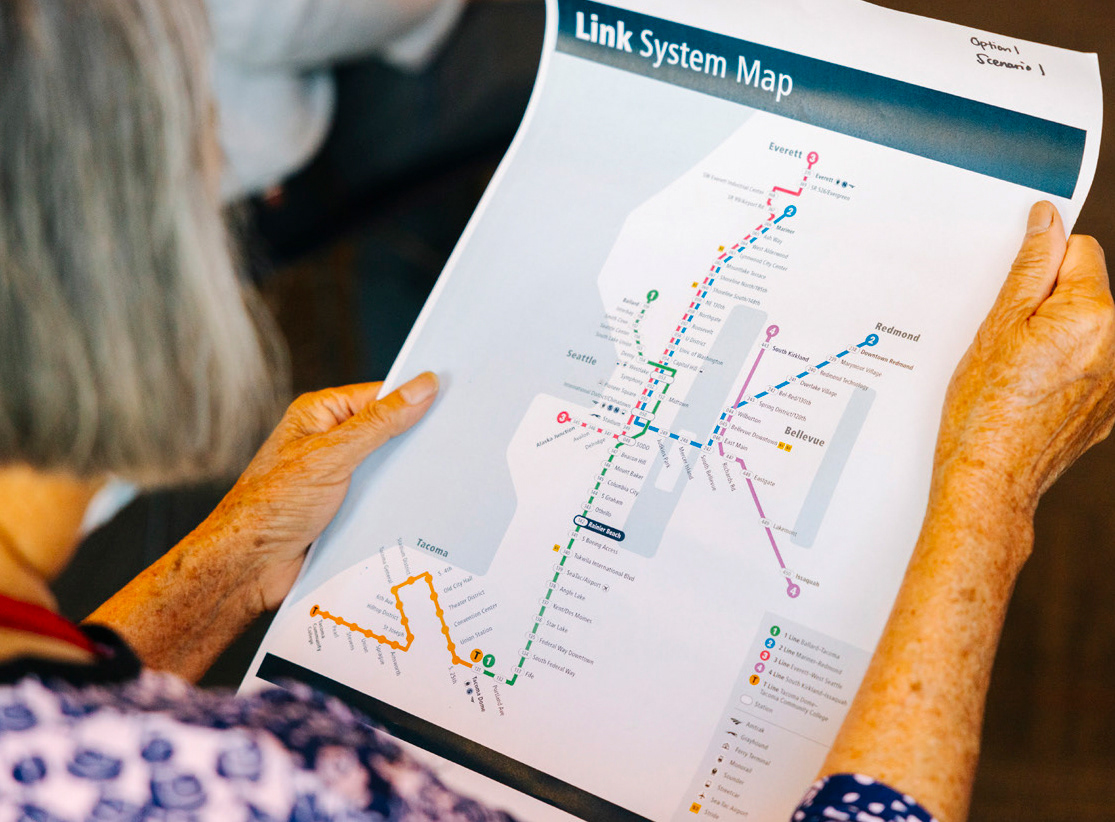
Photo courtesy of Sound Transit
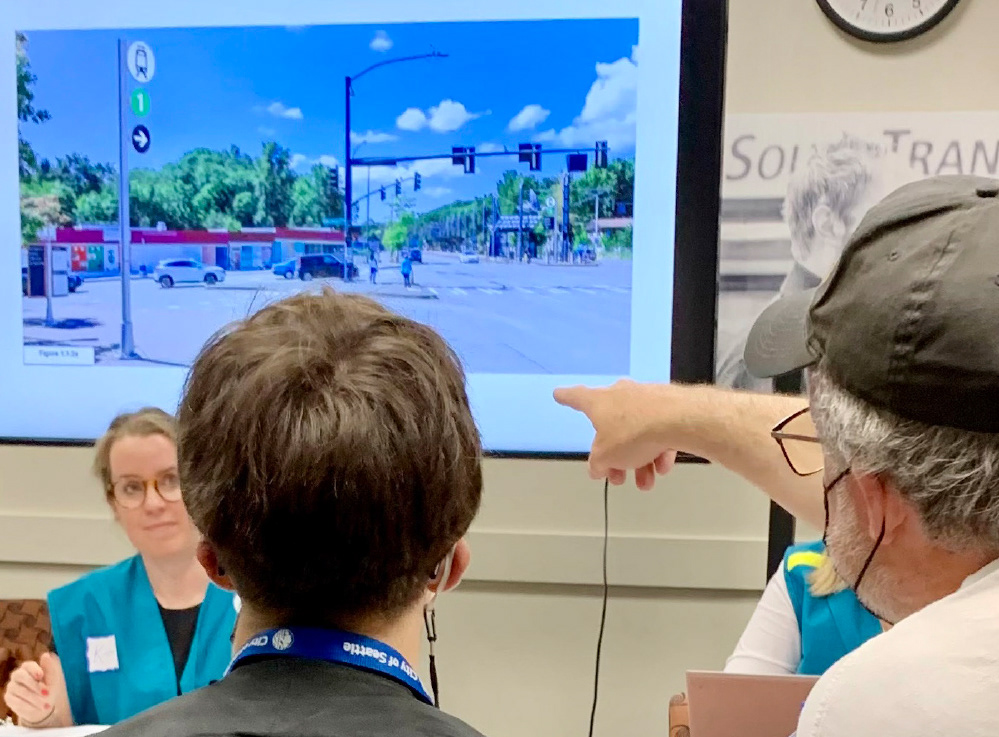
Photo courtesy of Sound Transit
PROJECT
Signage Standards & Station Codes
We designed a new station numbering system to replace the existing pictogram-based wayfinding for the Seattle metro area’s regional transportation network. The project began with extensive research of peer agencies worldwide and the application of universal design principles to ensure accessibility beyond national standards. To anticipate the complexity of new lines being built over the next two decades, we worked with Guidehouse to provide user-centered testing of our three proposed numerical station code options. We collaborated closely with the client and fabrication team to develop an implementation plan for the upcoming system expansion and to reformulate their signage standards manual.
OWNER
Sound Transit
STUDIO
Work completed at Mayer/Reed, August 2024
ROLE
Senior Designer, Project Manager
TEAM
WSP
Guidehouse
Tube Art Group
LINKS
The Urbanist